
What Makes Antique Coral Jewellery So Collectable?
Famous for its range of pink and orange hues, coral is an organic substance that has been prized for centuries. People all over the world have harvested, carved, polished and set coral into precious metals, or formed it into beads. We’re drawn to its natural strength and beauty, and its ability to add interest and colour to our adornments.
But have you ever thought about exactly what coral is? Is it a plant, an animal, or something else entirely? Is it even sustainable or ethical to buy and wear coral? And why are some types of antique coral jewelry rarer and more coveted than others? Let’s take a deep dive into the world of coral to explore this incredible material in more detail.
What is coral?
Although it often resembles a plant, coral is actually an animal. It is formed when thousands of tiny marine invertebrates called polyps join together in vast colonies. They excrete a material that hardens, forming a strong exoskeleton. Coral belongs to the same family as jellyfish and sea anemones.
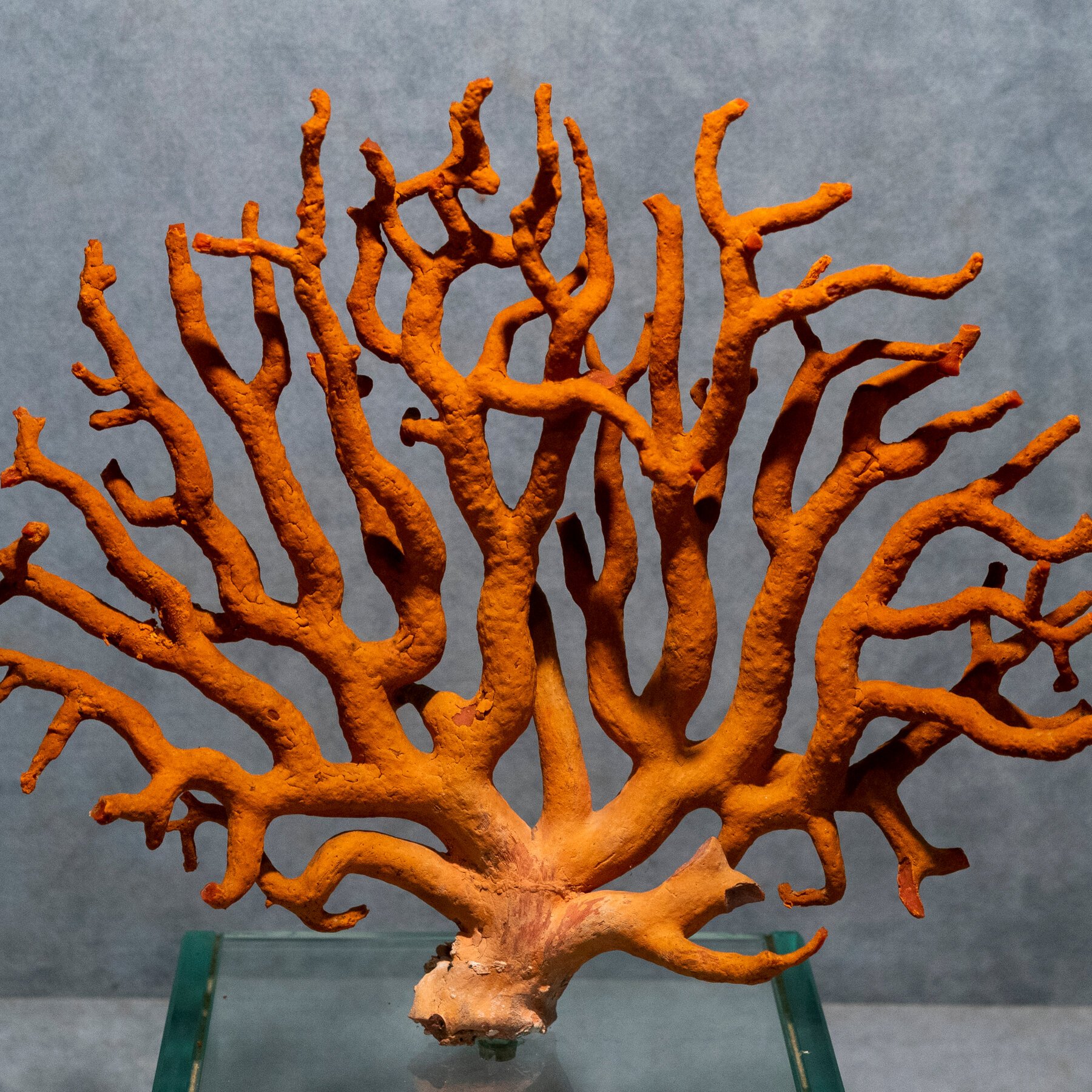
Is coral sustainable?
In a word, no. It is not acceptable to wear newly harvested coral, as the industry threatens the delicate and valuable ecosystems that coral supports. Although it covers just 1% of the seabed, coral supports over 20% of the ocean’s wildlife, making it vital for the continuation of many of the world’s marine species.
I recently visited Split in Croatia. It’s a stunning city, and this part of the Dalmatian coast has a long history of harvesting and creating incredible coral jewelry. Coral jewelry shops still line the seafront, and piles of brand-new coral jewelry are produced, bought and sold day after day.
What I found most interesting, and really quite sad, is that the designs often emulate antique Georgian and Victorian coral jewelry. These pieces are being made to resemble antique jewelry, and tourists are spending thousands of euros on unsustainable, antique-style pieces instead of seeking out older, more ethical options.
So, is antique coral jewellery ethical?
Buying antique coral jewelry, or jewelry that incorporates coral harvested a hundred years ago or more, is a more ethical and sustainable alternative. It supports the long-standing cultural importance of buying and selling coral jewelry around the Mediterranean, while protecting current coral stocks and the vital ecosystems they sustain.
Why is buying antique coral sustainable?
1. It decreases the demand for new coral
By sourcing coral that is already in circulation, you reduce the demand for newly harvested material from the seabed.
2. It values pieces with historical interest
By supporting the antique jewelry market, you help ensure that historically important pieces are preserved, valued and collected.
3. It protects living reefs
From an environmental perspective, buying antique coral helps protect living reefs. If there were no demand for newly harvested coral, it would no longer be collected for jewelry production.
What is Angel Skin coral?
If you are an antique jewelry collector, or take an interest in antique coral, you will likely have heard of Angel Skin coral. This light pink to peach-coloured variety is found in deep waters in the Pacific Ocean around Japan. It is rare and highly prized.
Buying Angel Skin coral new is both unethical and expensive — especially when compared with acquiring antique or vintage Angel Skin coral beads or jewelry, which is a far more sustainable choice.
If you find a well-priced set of uniformly coloured Angel Skin coral beads, snap them up, as they are extremely difficult to source. Larger Angel Skin examples, carved from a single uniform piece, are also rare and highly collectable.
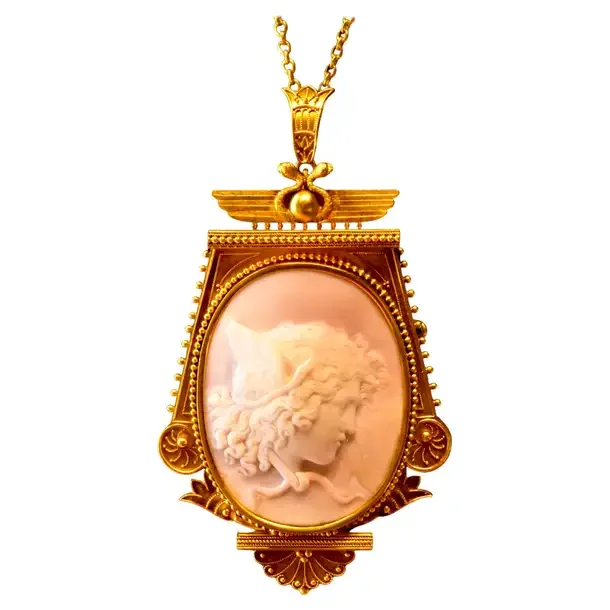
What does coral mean in antique jewelry?
You’ll find coral in polished, raw, carved and beaded forms in jewelry dating back millennia. In Ancient Rome, for example, coral was believed to ward off evil spirits. These properties later evolved into broader associations with ‘good luck’ and ‘good fortune’ throughout Italy, where coral is still revered, worn and gifted in jewelry and talismanic form — particularly to children and young people.
Coral is often carved into amulets worn for protection, prosperity and health. Coral figa charms and cornicello are considered powerful symbols, believed to bring fortune and fertility to the wearer.
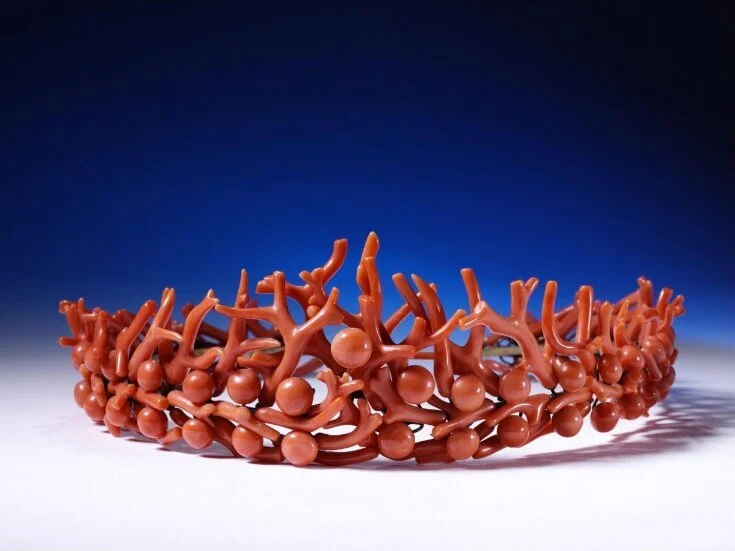
Buying antique coral jewelry
Antique coral jewelry, provided it is at least 20 years old (but ideally much older), is widely available. However, purchasing from a trusted dealer is the best way to ensure that a piece, whether a necklace, figa or bracelet, is genuinely vintage or antique, rather than newly made to resemble older jewelry.
Antique coral jewelry has regained popularity in recent years, with desirable pieces fetching increasingly high prices. With careful sourcing, it is still possible to find interesting older coral pieces, in the form of charms, pendants, necklaces, earrings or beads, at reasonable prices.
Colours such as red and salmon pink are more commonly available and more affordable, while finely carved coral amulets and the highest-quality examples can still fetch thousands at auctions and fairs around the world.